
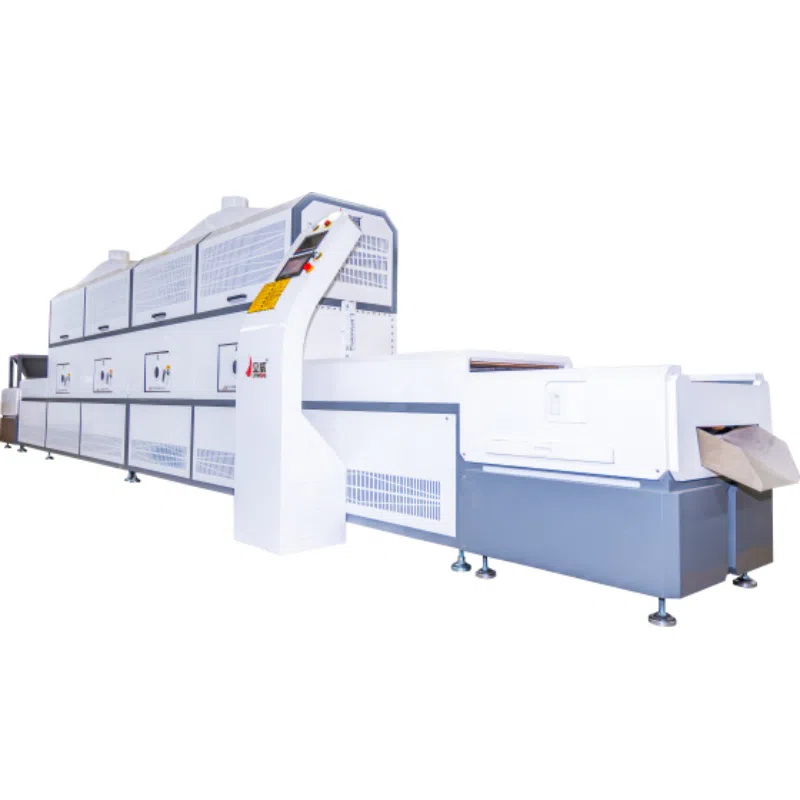
Product Description
Tunnel microwave sterilization equipment adopts 2450 MHz microwaves to penetrate into materials. Under microwave electromagnetic field, polar molecules inside materials (e.g. water molecules) shift from original thermal motion state to align with alternating microwave field. They vibrate at 2.45 billion cycles per second. Violent intermolecular friction generates abundant heat, raising material temperature simultaneously from inside out. Combined with microwave thermal effect (kill microorganisms via high temperature) and non‑thermal biological effect (destroy microbial structure), fast, uniform and thorough sterilization is achieved.
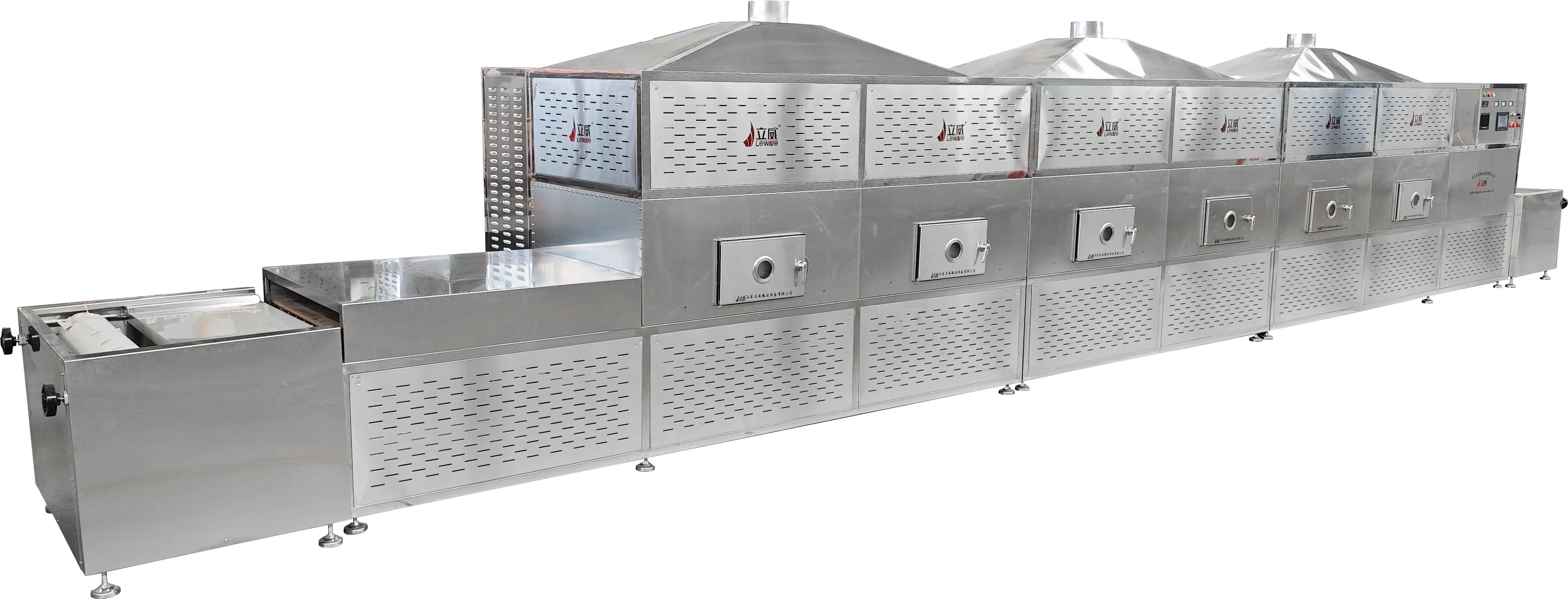
Main Advantages
Rapid High‑Throughput Sterilization Electromagnetic energy targets the interior of raw materials directly. Polar molecules including water molecules produce frictional heat via high‑frequency oscillation, bringing about simultaneous temperature rise across the whole substance without thermal conduction. Field validations indicate complete E. coli inactivation occurs at 70 °C, while total bacterial populations drop sharply within 2‑3 minutes under 80‑90 °C working conditions. This solution drastically shortens treatment cycles and delivers manifold productivity gains over legacy sterilization techniques.
Comprehensive Homogeneous Disinfection for Premium Output Quality Microwave radiation features strong penetration capability to heat both surface and inner portions of goods. Optimized field distribution inside the tunnel chamber, combined with constant material transit across alternating microwave amplitude zones, further evens out disinfection performance. Synergistic thermal and bio‑based non‑thermal mechanisms work together: heat suppresses bacterial activity, meanwhile microwave bio‑effects alter and deactivate microbial proteins and nucleic acids. Desirable disinfection outcomes can hence be obtained under mild temperature settings within short processing windows.
Mild‑Temperature Operation with Reduced Energy Consumption & Low Overheads Only the treated materials absorb microwave energy. Cavity frames and ambient air barely consume power, translating to minimal energy dissipation and superior thermal performance. Operational temperature ranges from 70 °C to 120 °C, considerably lower than parameters demanded by classic sterilization workflows. Power consumption falls by 30%‑50% against far‑infrared thermal systems, and energy savings may hit 50% when benchmarked against standard processing hardware.
Smart Automation for Streamlined Human‑Machine Operation Programmable‑logic‑controller architecture pairs with touch‑screen human‑machine interfaces to store and execute multiple custom process profiles. Section‑wise stepless microwave power tuning and frequency‑based conveyor speed modification grant fine‑tuned control over disinfection temperature and holding duration for diverse feedstocks. Zero thermal inertia allows instant startup and shutdown with no pre‑heating phase. Imported infrared temperature sensors enable auto‑calibration and restrain temperature swings to a narrow range.
Safety‑Oriented Eco‑Friendly Design Optimizing Workshop Environment Special leakage‑blocking assemblies are installed at material inlet and outlet openings, limiting microwave leakage below 5 mW/cm² to satisfy GB10436 specifications. Zero toxic fumes, radioactive remnants, excess heat or particulate waste are generated throughout disinfection cycles, complying fully with GMP regulatory standards. The equipment produces no self‑heating or thermal radiation, bringing substantial improvements to on‑site working surroundings for operators.
Uninterrupted Assembly‑Line Processing for Large‑Volume Output Tunnel‑configured layout enables round‑the‑clock non‑stop manufacturing. High daily handling capacity fits mass‑scale industrial‑grade production demands. Compact mechanical construction occupies limited floor area and imposes no special requirements for factory premises.
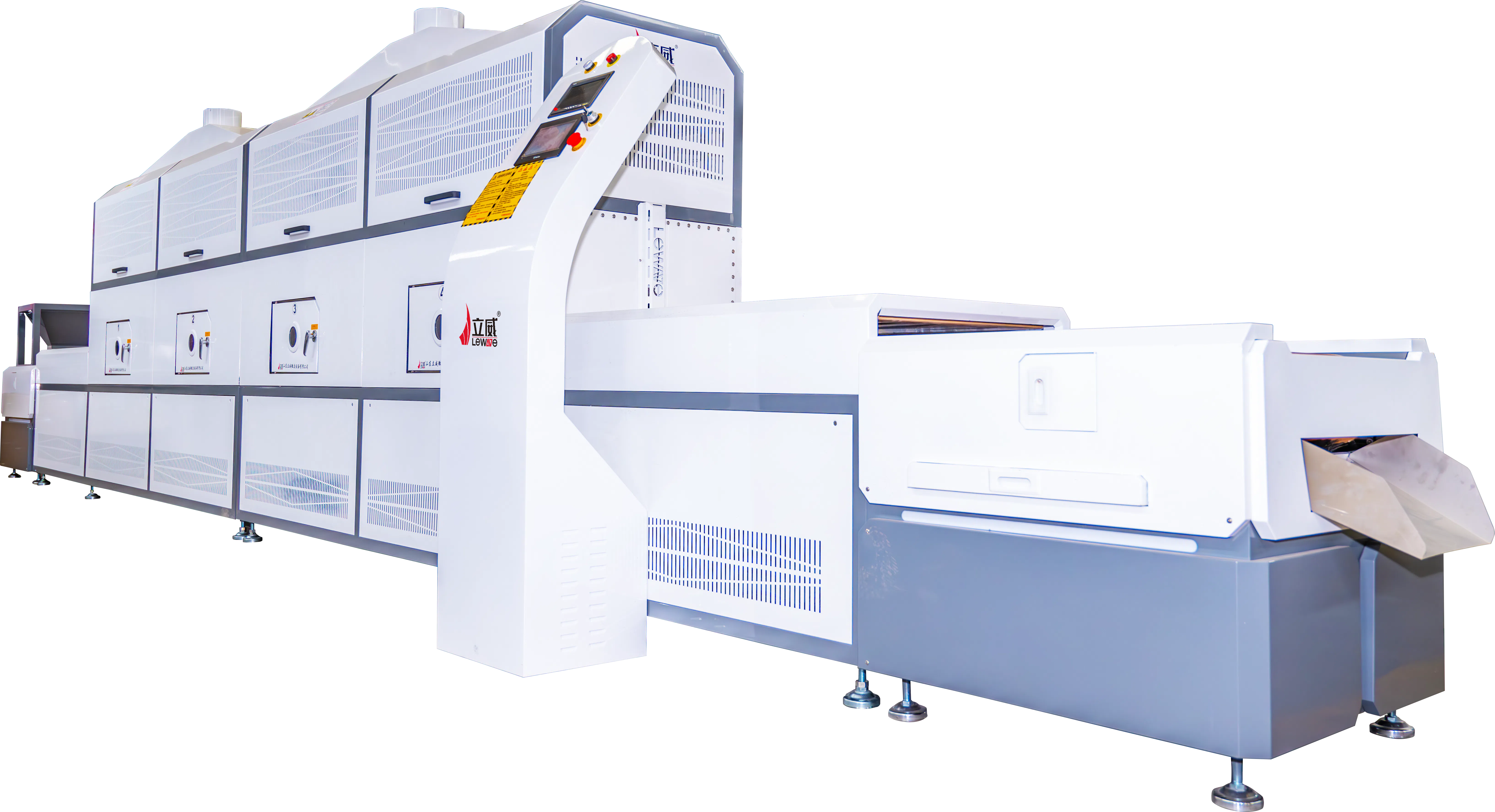
Equipment Composition
| Component | Function Description |
|---|---|
| Microwave Generating System | Produces microwave energy. Core parts are industrial‑grade imported magnetrons, optional air‑cooled or water‑cooled |
| Microwave Heating Cavity | Consists of multiple modular heating chambers for material microwave sterilization |
| Material Conveying System | PTFE / Teflon mesh conveyor belt with variable‑frequency speed regulation |
| Microwave Suppressor | Prevents microwave leakage at inlet and outlet |
| Moisture & Heat Exhaust System | Timely discharges water vapor and heat inside cavities |
| Automatic Control System | PLC touch‑screen control, supports auto temperature control, alarm reminder and video monitoring |
Over 90% of the machine is constructed with 304 stainless steel. Modular design enables easy cleaning, disassembly and maintenance. Microwave transformers are available in oil‑immersed water‑cooled, air‑cooled and self‑cooled types to ensure stable 24‑hour continuous operation.
Application Fields
Suitable for microbial elimination, decontamination and anti‑mildew treatment across food‑processing, pharmaceutical, chemical and additional industrial sectors.
Food Sector: Eliminate harmful microbes from seasonings including chicken essence and flavor additives; canned commodities such as pickled vegetables, fruits and drinks; powdered substances like chili powder. It also handles bean‑based goods, meat items and ready‑to‑eat meals, alongside instant noodles, fresh noodles and rice vermicelli. Dried fruits, snack foods, expanded‑texture products and health supplements can likewise undergo decontamination via this equipment.
Pharmaceutical Sector: Carry out combined drying and microbial removal for herbal pills, crude botanical ingredients and liquid oral formulations. It supports fast dehydration and disinfection for rubber‑made medical supplies.
Other Application Scenarios: Tea leaf fixation, anti‑mildew treatment for tobacco materials, as well as drying and sanitizing operations for chemical raw materials.


