
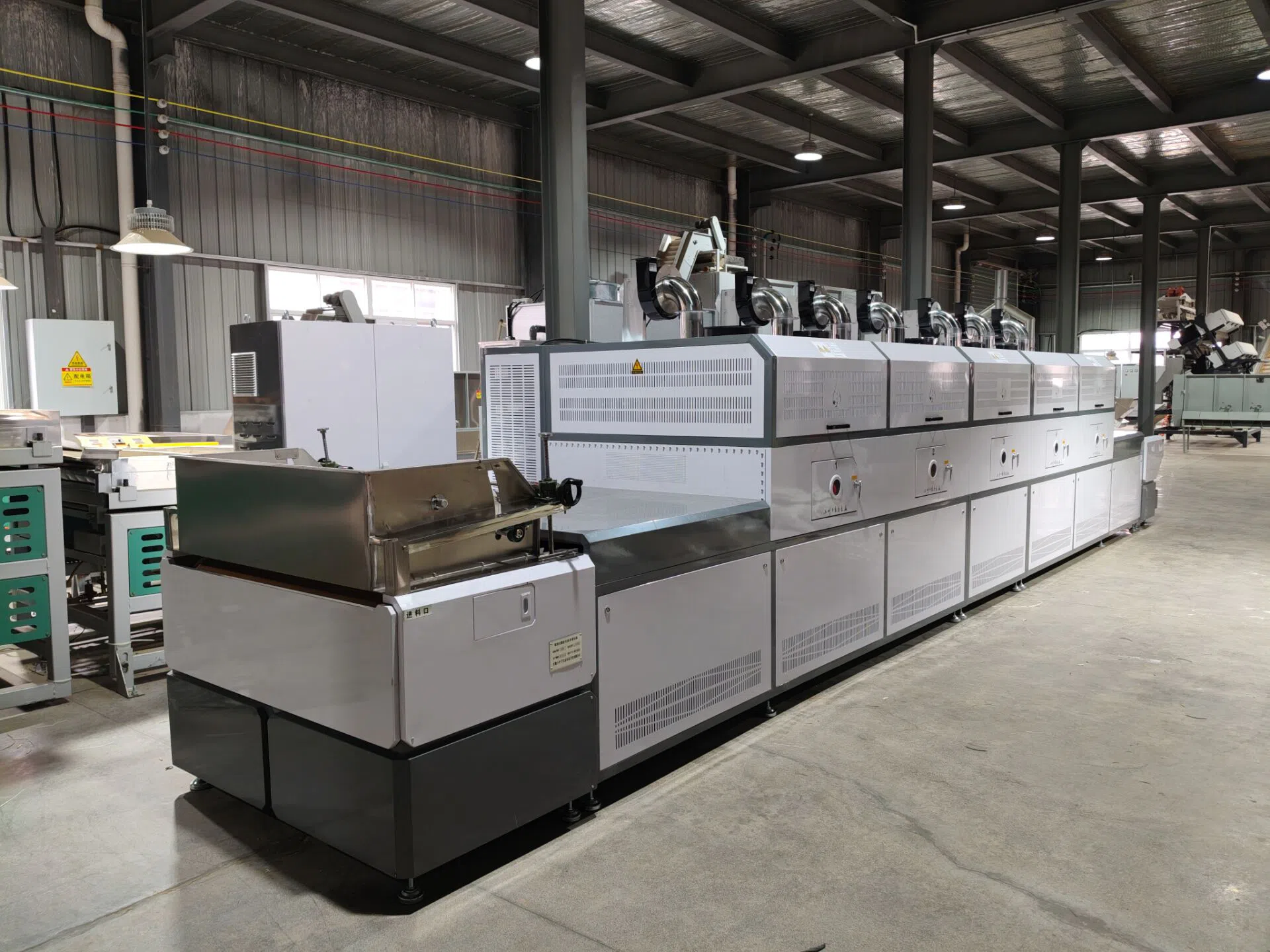
The green development of microwave equipment mainly relies on four major approaches: variable-frequency energy efficiency upgrading, internal heating efficiency improvement, zero-emission process substitution, and full-life-cycle low-carbon management. By precisely converting electric energy and adopting intelligent control technology, such equipment can reduce energy consumption by 30%–70% and eradicate pollution from the source.
Core Driving Factors & Technical Routes
1. Mechanism of Energy Efficiency Enhancement
Variable-frequency technology is adopted to replace traditional fixed-frequency start-stop control, realizing stepless power adjustment and continuous energy output. The thermal efficiency is raised above 64%, meeting the national Class 1 energy efficiency standard, which saves 20%–30% electricity compared with conventional equipment.
Industrial microwaves adopt the internal heating principle, with a heat utilization rate exceeding 80%, far higher than the less than 40% efficiency of traditional hot-air heating, bringing an overall energy-saving effect of 40%–70%.
2. Clean Process Replacement
Fully electric heating replaces coal-fired and gas-fired heating modes, producing no exhaust gas, smoke dust or VOC emissions during operation. Low-temperature drying at 40–80°C maintains the activity of raw materials and cuts resource waste triggered by high-temperature deterioration, fully complying with rigid dual-carbon policies.
3. Intelligent and Accurate Regulation
Equipped with PLC control systems and IoT sensors, the equipment dynamically adjusts power and running duration according to real-time material conditions, avoiding energy waste caused by idle heating and overheating. Some models support adaptive flow and temperature adjustment, forming a closed-loop energy-saving system that supplies energy strictly on demand.
4. Eco-friendly Materials & Green Manufacturing
Upstream production uses low-loss environmentally friendly new materials to replace heavily polluted components. Precision machining is applied in the manufacturing process to lower production waste. Downstream manufacturers establish a recycling and cascade utilization system for core parts including magnetrons, so as to build a circular economic system.
Practical Effects in Key Application Scenarios
1. Industrial Drying and Curing
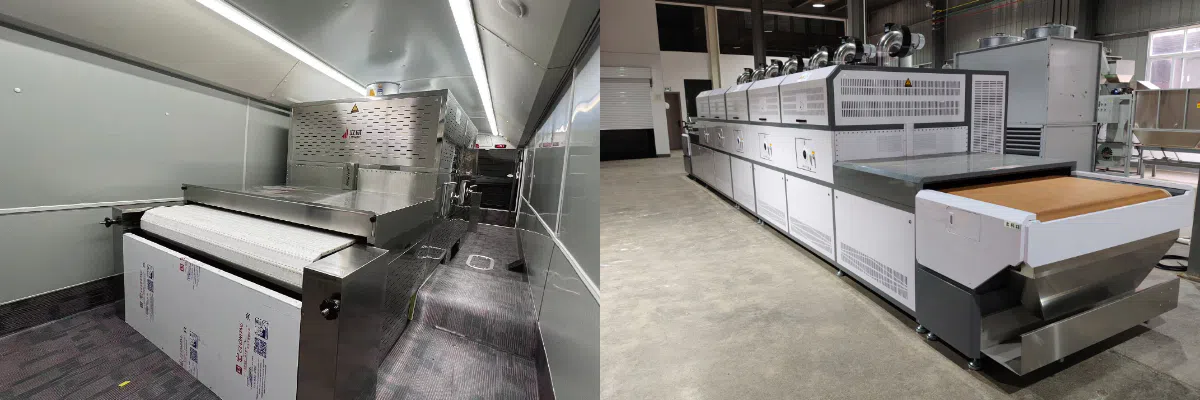
For food, pharmaceutical and lithium battery materials, microwave low-temperature drying shortens the processing cycle to 1/5–1/10 of traditional techniques. It also solves the common defect of surface scorching and incomplete internal drying, significantly lowering the reject rate.
2. Laboratory Analysis
Microwave digestion technology reduces the consumption of acid reagents by more than 50% and cuts volatile emissions, enabling microscale and low-toxicity sample pretreatment.
3. Fluid Sterilization
Microwave electrodeless ultraviolet disinfection substitutes chemical disinfection methods. It generates no secondary pollution and requires no preheating, suiting continuous production in water treatment plants and reducing daily maintenance and consumable costs.
4. Household Kitchen Appliances
Variable-frequency household microwave ovens have achieved a 42% market penetration rate. Their uniform heating reduces food nutrient loss and extra energy consumption from repeated heating, facilitating low-carbon lifestyles among residents.
Future Development Directions
1. High-frequency Development & Highly Integrated Design
The industry will explore 6G and terahertz frequency bands. System-level packaging technology will shrink equipment size and weight, reducing energy consumption for each unit of performance.
2. AI-driven Adaptive Energy Saving
Machine learning will be applied to predict load changes and automatically optimize operating parameters, further tapping into energy-saving potential.
3. Full-chain Carbon Footprint Management
Enterprises will formulate full-process carbon tracking standards covering raw material procurement to waste recycling, and promote the improvement of industrial green certification systems.


